
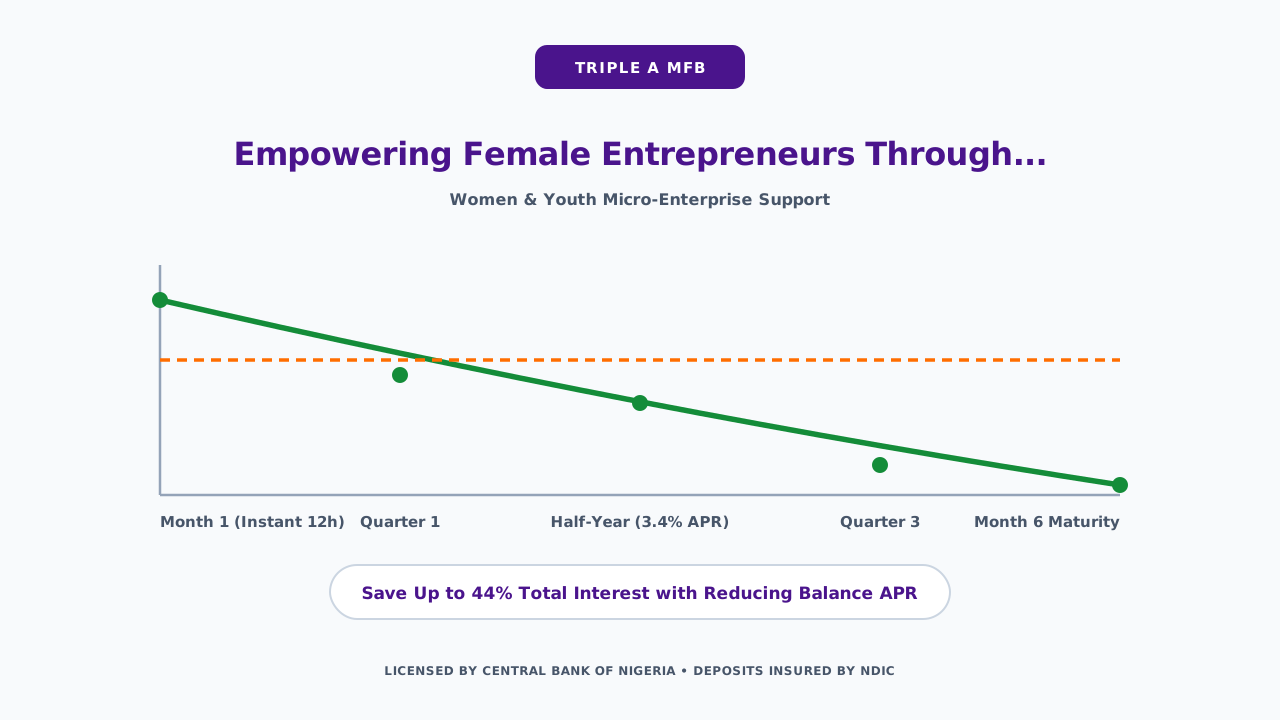
Strategic Overview: Female Entrepreneur Microfinance
In the evolving landscape of Nigerian commerce, female entrepreneur microfinance serves as a critical driver of enterprise liquidity and financial stability. For micro-enterprises, retail merchants, and structured households, moving beyond informal cash arrangements toward verified microfinance infrastructure eliminates systemic operational friction.
Achieving sustainable economic resilience requires understanding the intersection of transparent credit pricing, disciplined capital allocation, and statutory regulatory protections.
Key Tactical Takeaways
- Mobile banking platforms lower transaction overhead and expand commercial reach beyond physical bank branch boundaries.
- Financial literacy training combined with accessible credit accelerates grassroots business formalization.
- Agency banking merchant networks reduce cash handling risks while providing instant local liquidity.
- Grassroots financial inclusion bridges the wealth divide by delivering institutional banking directly to informal trade clusters.
Market Dynamics & Structural Realities in Nigeria
The contemporary Nigerian economic environment presents both unprecedented opportunities and operational hurdles for micro-enterprises. Rapid digital payment adoption has lowered cash handling barriers, yet navigating inflationary cost pressures and currency fluctuations requires rigorous capital discipline.
Within the scope of women & youth micro-enterprise support, businesses that transition from informal cash handling to structured banking channels secure clear institutional advantages, including verifiable turnover histories and insulated working capital buffers.
"Sustainable economic development in emerging markets starts with grassroots financial access. When micro-enterprises have access to dependable credit and savings buffers, community wealth multiplies exponentially."
— Ugbeda Preacher, Head of IT & Admin, Triple A Microfinance Bank Limited
Microfinance Loan Options at a Glance
| Loan Product | Target Audience | Tenure | Repayment Schedule | Key Advantage |
|---|---|---|---|---|
| SME Working Capital | Registered Businesses | 1 - 12 Months | Monthly Installments | Competitive reducing interest rates |
| Daily Microcredit | Market Traders & Artisans | 30 - 90 Days | Daily / Weekly Deductions | Zero collateral; fast 24h disbursement |
| Asset & Equipment | Commercial Operators | 6 - 24 Months | Structured Milestone | Direct machinery acquisition |
| Agri-Value Chain | Farmers & Processors | Seasonal (3-9 Months) | Harvest-Matched Bullet | Moratorium period included |
Diagnostic Risk Matrix & Mitigation Protocols
Proactive risk governance separates thriving enterprises from distressed businesses. The following matrix highlights critical vulnerabilities and their institutional remedies:
Revenue Commingling
Risk: Mixing household cash with business receipts creates artificial cash surpluses that mask structural insolvency.
Remedy: Establish dedicated corporate and personal account splits with scheduled dividend withdrawals.
Predatory Debt Traps
Risk: High-frequency unregistered loan apps enforce exorbitant weekly compounding fees.
Remedy: Refinance short-term debt into structured reducing-balance microfinance facilities.
Unverified e-KYC Gaps
Risk: Unlinked biometric credentials trigger regulatory account freezes during peak trade periods.
Remedy: Complete Tier 3 digital identity harmonization with verified NIN and utility records.
The 4-Stage Action Checklist for Operators
Deploy this practitioner checklist to harden operational efficiency and maximize bankability:
- Audit Cash Inflows: Map all revenue streams to identify and eliminate undocumented credit sales.
- Transition to Verified Channels: Direct all customer payments through digital bank transfers and mobile POS channels.
- Build an Operating Buffer: Accumulate a liquid reserve equivalent to 30 to 45 days of fixed operational overhead.
- Leverage Structured Credit: Utilize reducing-balance loans to fund bulk purchasing advantages during seasonal trade peaks.
Frequently Asked Questions on Female Entrepreneur Microfinance
How do microfinance banks advance grassroots financial inclusion?
Microfinance banks provide tailored, accessible savings, credit, and agency banking services directly to informal trade clusters, unburdened by the stringent barriers of commercial banks.
What are the benefits of operating an agency banking POS terminal?
Agency banking empowers local merchants to earn consistent commission revenue by facilitating instant cash deposits, withdrawals, and bill payments for their community.
How can informal traders build a verifiable credit score?
By regularly channeling store turnover through a licensed microfinance bank account and maintaining prompt repayment records on micro-credit facilities.
Empower Your Business Today with Triple A MFB
Experience hassle-free banking, flexible SME loan facilities, and competitive savings yields with Triple A Microfinance Bank Limited.