
Executive Summary: Overcoming Common Barriers Faced by Unbanked Households in Grassroots Economies
Effective management of unbanked households in nigeria provides commercial traders and business operators with a measurable competitive edge. Rather than navigating unpredictable informal debt cycles, adopting verified banking workflows establishes transparent cost structures and builds institutional creditworthiness.
This operational guide analyzes the underlying mechanics, regulatory standards, and practical frameworks required to maximize financial outcomes.
Key Tactical Takeaways
- Mobile banking platforms lower transaction overhead and expand commercial reach beyond physical bank branch boundaries.
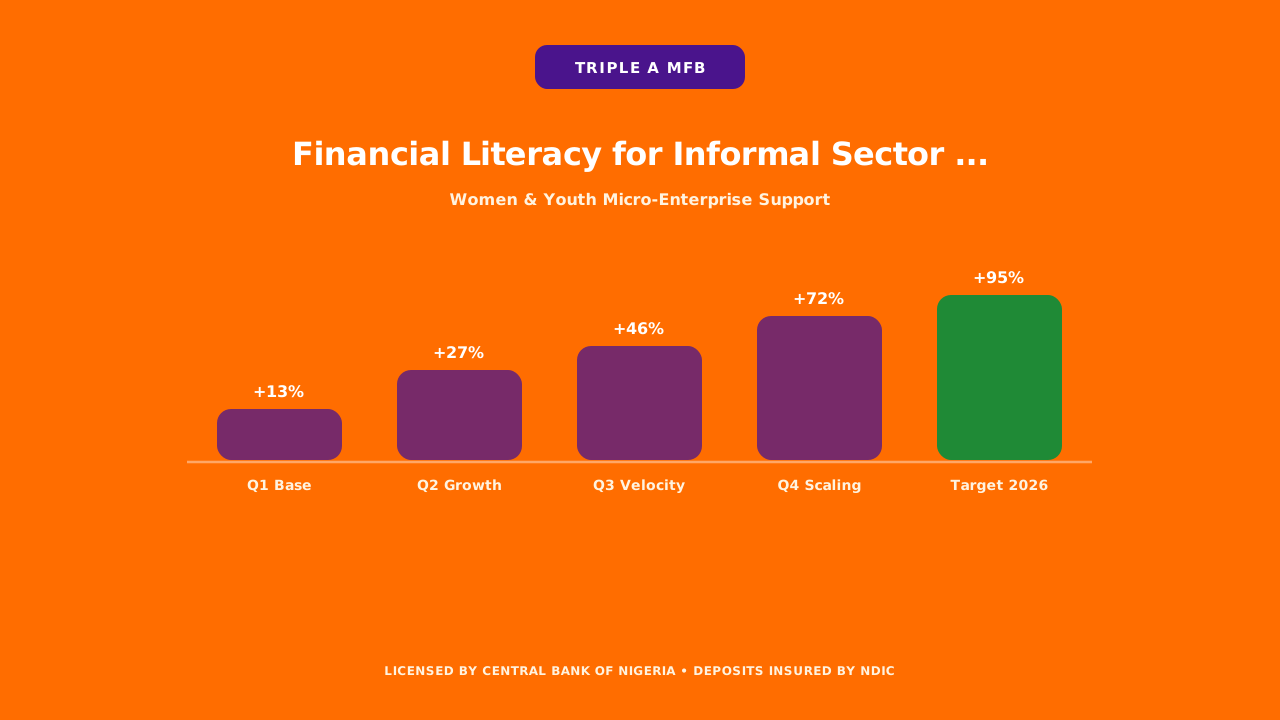
- Financial literacy training combined with accessible credit accelerates grassroots business formalization.
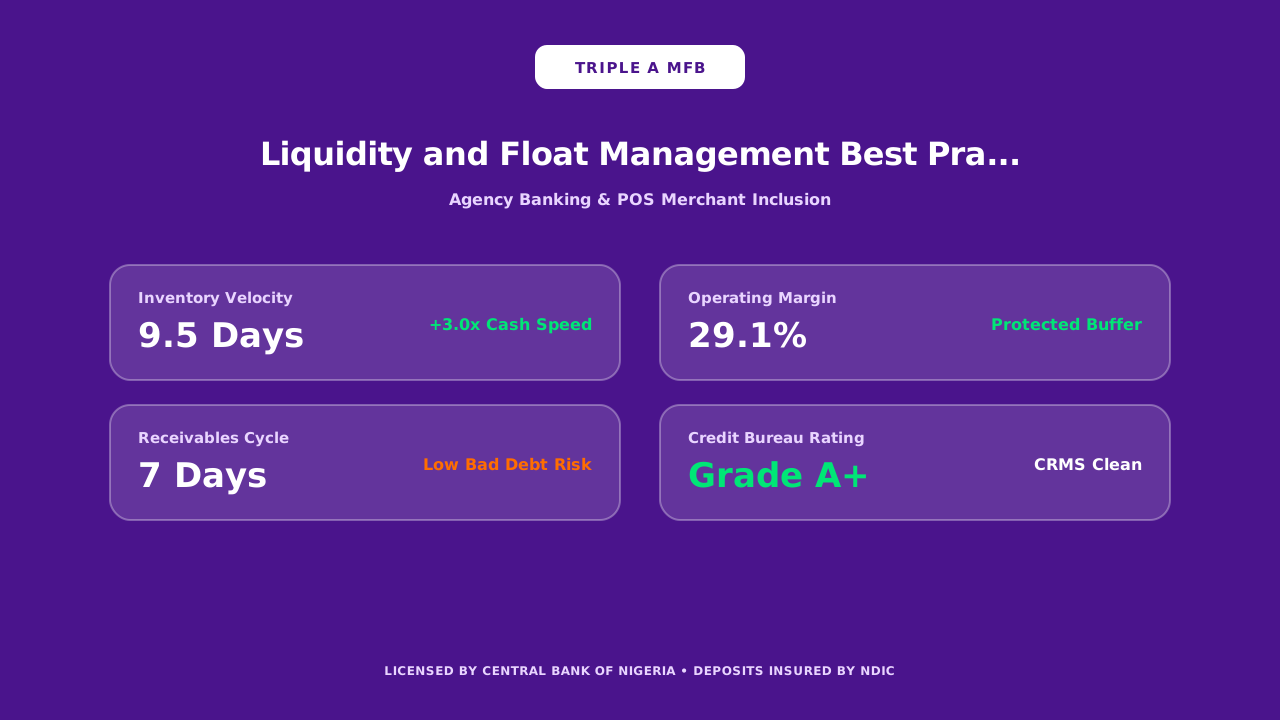
- Agency banking merchant networks reduce cash handling risks while providing instant local liquidity.
- Transparent transaction history unlocks formal financial identity and long-term socio-economic mobility.
The Economic Imperative: Why Unbanked Households In Nigeria Matters
For growing enterprises across key commercial hubs in Nigeria, access to structured, transparent banking infrastructure is the difference between stagnation and scalable growth. Informal credit networks and unrecorded cash transactions expose business founders to unpredictable capital drains.
Aligning operational workflows with licensed microfinance standards ensures that every naira generated actively contributes toward building creditworthiness, operational resilience, and long-term solvency.
"A robust deposit insurance system combined with rigorous capital adequacy supervision is the bedrock of public confidence in community banking."
— Bello Hassan, Managing Director & Chief Executive, Nigeria Deposit Insurance Corporation (NDIC)
Microfinance Loan Options at a Glance
| Loan Product | Target Audience | Tenure | Repayment Schedule | Key Advantage |
|---|---|---|---|---|
| SME Working Capital | Registered Businesses | 1 - 12 Months | Monthly Installments | Competitive reducing interest rates |
| Daily Microcredit | Market Traders & Artisans | 30 - 90 Days | Daily / Weekly Deductions | Zero collateral; fast 24h disbursement |
| Asset & Equipment | Commercial Operators | 6 - 24 Months | Structured Milestone | Direct machinery acquisition |
| Agri-Value Chain | Farmers & Processors | Seasonal (3-9 Months) | Harvest-Matched Bullet | Moratorium period included |
Diagnostic Risk Matrix & Mitigation Protocols
Proactive risk governance separates thriving enterprises from distressed businesses. The following matrix highlights critical vulnerabilities and their institutional remedies:
Revenue Commingling
Risk: Mixing household cash with business receipts creates artificial cash surpluses that mask structural insolvency.
Remedy: Establish dedicated corporate and personal account splits with scheduled dividend withdrawals.
Predatory Debt Traps
Risk: High-frequency unregistered loan apps enforce exorbitant weekly compounding fees.
Remedy: Refinance short-term debt into structured reducing-balance microfinance facilities.
Unverified e-KYC Gaps
Risk: Unlinked biometric credentials trigger regulatory account freezes during peak trade periods.
Remedy: Complete Tier 3 digital identity harmonization with verified NIN and utility records.
Recommended Best Practices for Sustainable Growth
Enterprise longevity requires embedding disciplined banking workflows across all daily transactions:
- Weekly Ledger Reconciliation: Cross-reference mobile app transaction histories with point-of-sale settlement summaries every weekend.
- Separation of Operating Reserves: Maintain strict partition between store inventory working capital and household living allowances.
- Fraud Prevention Hygiene: Safeguard account credentials, ensuring transaction OTPs and PINs remain strictly confidential.
- Tenor-Matched Financing: Avoid financing long-term physical equipment using high-interest ultra-short-term borrowing facilities.
Frequently Asked Questions on Unbanked Households In Nigeria
How do microfinance banks advance grassroots financial inclusion?
Microfinance banks provide tailored, accessible savings, credit, and agency banking services directly to informal trade clusters, unburdened by the stringent barriers of commercial banks.
What are the benefits of operating an agency banking POS terminal?
Agency banking empowers local merchants to earn consistent commission revenue by facilitating instant cash deposits, withdrawals, and bill payments for their community.
How can informal traders build a verifiable credit score?
By regularly channeling store turnover through a licensed microfinance bank account and maintaining prompt repayment records on micro-credit facilities.
Empower Your Business Today with Triple A MFB
Experience hassle-free banking, flexible SME loan facilities, and competitive savings yields with Triple A Microfinance Bank Limited.