
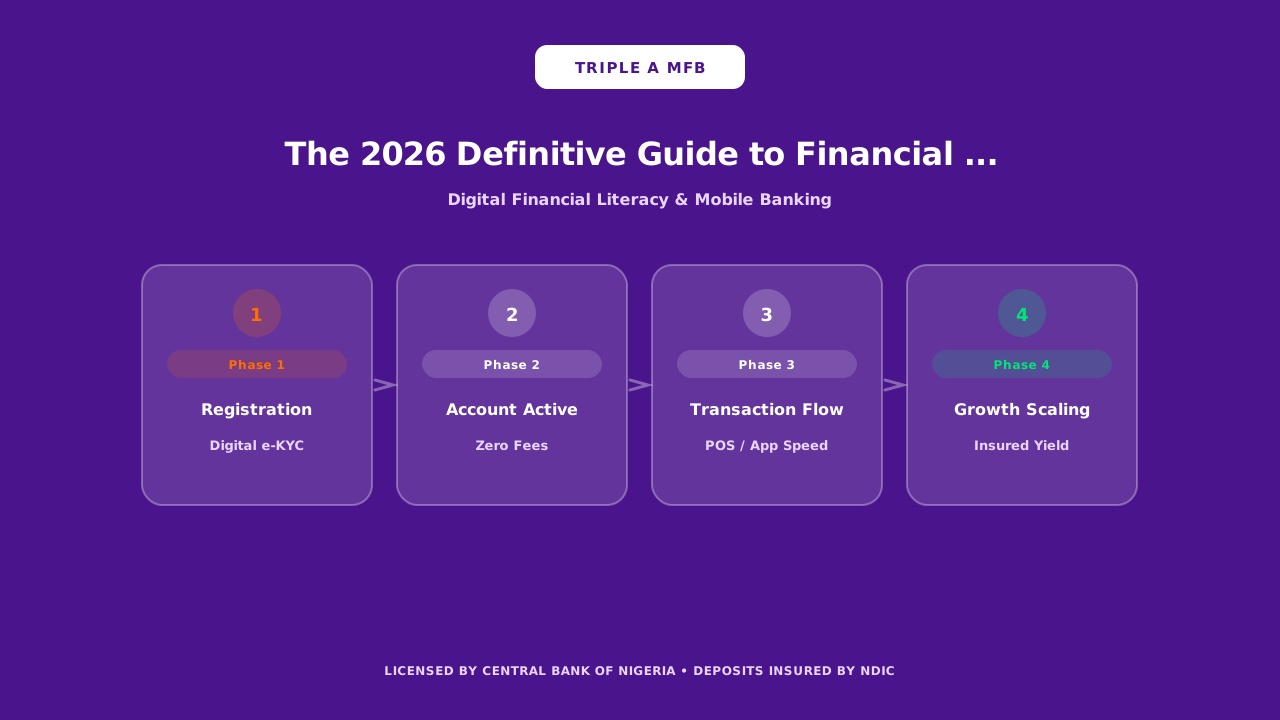
Financial Core: Financial Inclusion In Nigeria Principles
Mastering the 2026 definitive guide to financial inclusion and digital banking in nigeria directly impacts operating margins, inventory velocity, and net business profitability. When enterprises replace guesswork with disciplined ledger tracking and formal microfinance partnerships, capital leakage is curtailed and borrowable capacity expands exponentially.
The following analysis breaks down the key execution pillars from a practitioner perspective.
Key Tactical Takeaways
- Mobile banking platforms lower transaction overhead and expand commercial reach beyond physical bank branch boundaries.
- Agency banking merchant networks reduce cash handling risks while providing instant local liquidity.
- Digital micro-savings accounts encourage disciplined capital accumulation among market women and trade artisans.
- Grassroots financial inclusion bridges the wealth divide by delivering institutional banking directly to informal trade clusters.
Market Dynamics & Structural Realities in Nigeria
The contemporary Nigerian economic environment presents both unprecedented opportunities and operational hurdles for micro-enterprises. Rapid digital payment adoption has lowered cash handling barriers, yet navigating inflationary cost pressures and currency fluctuations requires rigorous capital discipline.
Within the scope of digital financial literacy & mobile banking, businesses that transition from informal cash handling to structured banking channels secure clear institutional advantages, including verifiable turnover histories and insulated working capital buffers.
"Sustainable economic development in emerging markets starts with grassroots financial access. When micro-enterprises have access to dependable credit and savings buffers, community wealth multiplies exponentially."
— Ugbeda Preacher, Head of IT & Admin, Triple A Microfinance Bank Limited
Microfinance Loan Options at a Glance
| Loan Product | Target Audience | Tenure | Repayment Schedule | Key Advantage |
|---|---|---|---|---|
| SME Working Capital | Registered Businesses | 1 - 12 Months | Monthly Installments | Competitive reducing interest rates |
| Daily Microcredit | Market Traders & Artisans | 30 - 90 Days | Daily / Weekly Deductions | Zero collateral; fast 24h disbursement |
| Asset & Equipment | Commercial Operators | 6 - 24 Months | Structured Milestone | Direct machinery acquisition |
| Agri-Value Chain | Farmers & Processors | Seasonal (3-9 Months) | Harvest-Matched Bullet | Moratorium period included |
Comparative Analysis: Informal Methods vs. Institutional Standards
Understanding the fundamental distinction between unverified informal practices and licensed microfinance mechanisms is essential for long-term wealth preservation:
| Operational Metric | Informal / Unregulated Approach | Licensed Microfinance Standard (Triple A MFB) |
|---|---|---|
| Interest Computation | Flat rate calculations masking high effective APR | Transparent reducing-balance APR with clear amortizations |
| Depositor Protection | Zero insurance; complete capital loss risk | 100% insured by NDIC under Central Bank of Nigeria mandates |
| Credit Building | Invisible to national credit registries | Builds verified Credit Bureau (CRMS) rating for enterprise scaling |
| Transaction Security | Manual cash vulnerability & theft exposure | End-to-end encrypted digital transfers & instant settlements |
Practical Implementation Protocols
To successfully integrate these principles into day-to-day operations, business owners and savers should execute the following four structured steps:
- Tier 3 Digital Harmonization: Link verified BVN, NIN, and utility records to eliminate balance limitations and guarantee zero transaction friction.
- Automated Revenue Allocation: Configure automatic 10% daily turnover sweeps into an insured interest-bearing savings vault.
- Credit Registry Management: Protect your Credit Bureau rating by consistently meeting repayment obligations before scheduled due dates.
- Dedicated Advisory Engagement: Consult with licensed microfinance credit officers to structure bespoke working capital facilities tailored to your inventory turnover.
Related Strategic Guides in This Series
Frequently Asked Questions on Financial Inclusion In Nigeria
How do microfinance banks advance grassroots financial inclusion?
Microfinance banks provide tailored, accessible savings, credit, and agency banking services directly to informal trade clusters, unburdened by the stringent barriers of commercial banks.
What are the benefits of operating an agency banking POS terminal?
Agency banking empowers local merchants to earn consistent commission revenue by facilitating instant cash deposits, withdrawals, and bill payments for their community.
How can informal traders build a verifiable credit score?
By regularly channeling store turnover through a licensed microfinance bank account and maintaining prompt repayment records on micro-credit facilities.
Ready to Transform Your Financial Future?
Open a Triple A Microfinance Bank personal or business account in less than 5 minutes. Enjoy seamless transfers, zero hidden charges, and fast access to SME growth credit.