
Financial Core: Banking Credentials Security Principles
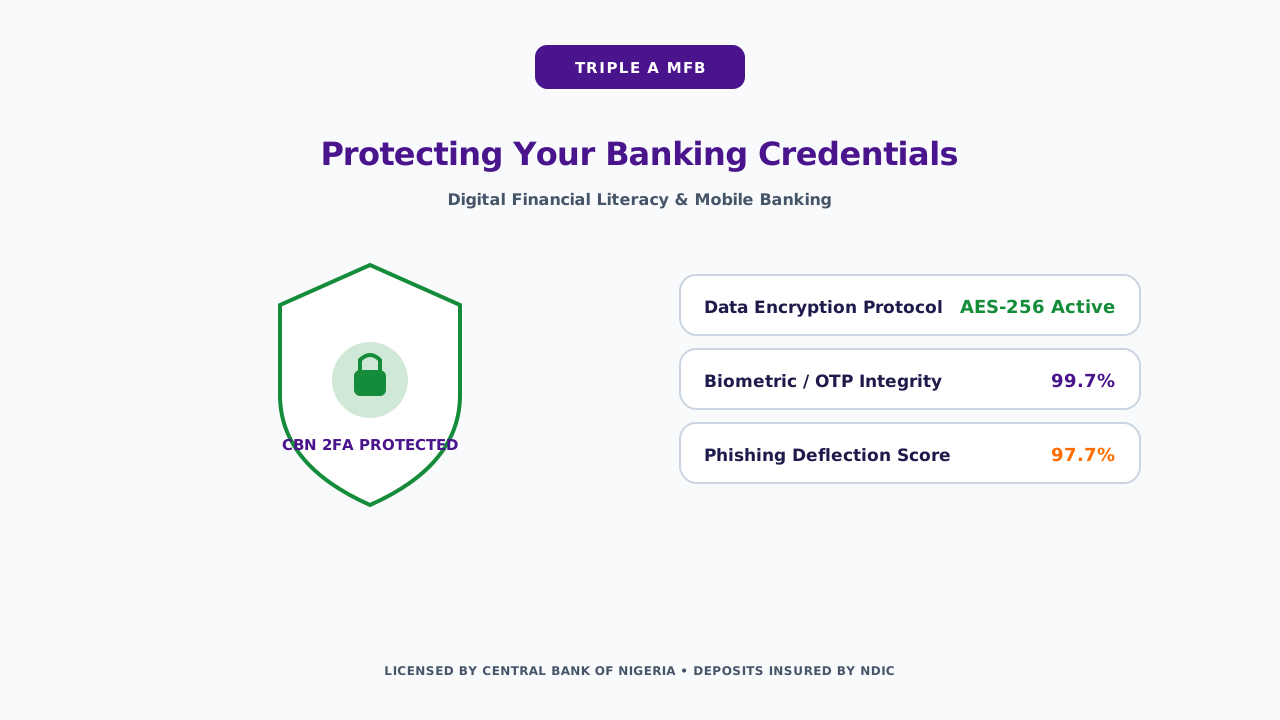
Mastering protecting your banking credentials: a grassroots guide to cyber hygiene and phishing prevention directly impacts operating margins, inventory velocity, and net business profitability. When enterprises replace guesswork with disciplined ledger tracking and formal microfinance partnerships, capital leakage is curtailed and borrowable capacity expands exponentially.
The following analysis breaks down the key execution pillars from a practitioner perspective.
Key Tactical Takeaways
- Agency banking merchant networks reduce cash handling risks while providing instant local liquidity.
- Mobile banking platforms lower transaction overhead and expand commercial reach beyond physical bank branch boundaries.
- Transparent transaction history unlocks formal financial identity and long-term socio-economic mobility.
- Digital micro-savings accounts encourage disciplined capital accumulation among market women and trade artisans.
Core Foundation Guide
This article is part of our comprehensive curriculum on Business & Financial Inclusion. For the complete strategic overview, read our pillar guide: The 2026 Definitive Guide to Financial Inclusion and Digital Banking in Nigeria.
The Economic Imperative: Why Banking Credentials Security Matters
For growing enterprises across key commercial hubs in Nigeria, access to structured, transparent banking infrastructure is the difference between stagnation and scalable growth. Informal credit networks and unrecorded cash transactions expose business founders to unpredictable capital drains.
Aligning operational workflows with licensed microfinance standards ensures that every naira generated actively contributes toward building creditworthiness, operational resilience, and long-term solvency.
"Sustainable economic development in emerging markets starts with grassroots financial access. When micro-enterprises have access to dependable credit and savings buffers, community wealth multiplies exponentially."
— Ugbeda Preacher, Head of IT & Admin, Triple A Microfinance Bank Limited
Microfinance Loan Options at a Glance
| Loan Product | Target Audience | Tenure | Repayment Schedule | Key Advantage |
|---|---|---|---|---|
| SME Working Capital | Registered Businesses | 1 - 12 Months | Monthly Installments | Competitive reducing interest rates |
| Daily Microcredit | Market Traders & Artisans | 30 - 90 Days | Daily / Weekly Deductions | Zero collateral; fast 24h disbursement |
| Asset & Equipment | Commercial Operators | 6 - 24 Months | Structured Milestone | Direct machinery acquisition |
| Agri-Value Chain | Farmers & Processors | Seasonal (3-9 Months) | Harvest-Matched Bullet | Moratorium period included |
Step-by-Step Execution Blueprint for Banking Credentials Security
To institutionalize best practices, enterprises must deploy a phased implementation sequence that minimizes operational disruption while maximizing compliance:
Phase 1: Baseline Audit
Evaluate current cash flow leakages, undocumented credit sales, and manual record inconsistencies across all daily trade channels.
Phase 2: Digital Transition
Migrate physical ledger records into verified mobile banking and POS transaction streams with full BVN/NIN validation.
Phase 3: Structured Optimization
Establish automated daily sweep accounts, negotiate reducing-balance credit terms, and conduct monthly gross margin reviews.
The 4-Stage Action Checklist for Operators
Deploy this practitioner checklist to harden operational efficiency and maximize bankability:
- Audit Cash Inflows: Map all revenue streams to identify and eliminate undocumented credit sales.
- Transition to Verified Channels: Direct all customer payments through digital bank transfers and mobile POS channels.
- Build an Operating Buffer: Accumulate a liquid reserve equivalent to 30 to 45 days of fixed operational overhead.
- Leverage Structured Credit: Utilize reducing-balance loans to fund bulk purchasing advantages during seasonal trade peaks.
Frequently Asked Questions on Banking Credentials Security
How do microfinance banks advance grassroots financial inclusion?
Microfinance banks provide tailored, accessible savings, credit, and agency banking services directly to informal trade clusters, unburdened by the stringent barriers of commercial banks.
What are the benefits of operating an agency banking POS terminal?
Agency banking empowers local merchants to earn consistent commission revenue by facilitating instant cash deposits, withdrawals, and bill payments for their community.
How can informal traders build a verifiable credit score?
By regularly channeling store turnover through a licensed microfinance bank account and maintaining prompt repayment records on micro-credit facilities.
Empower Your Business Today with Triple A MFB
Experience hassle-free banking, flexible SME loan facilities, and competitive savings yields with Triple A Microfinance Bank Limited.